A Bear Cub Rescued From the Cascade Fire Returned to the Wild in May
A black bear cub orphaned by a Washington wildfire in 2024 was released into a remote section of North Cascades National Park last week, after eighteen months in rehabilitation.
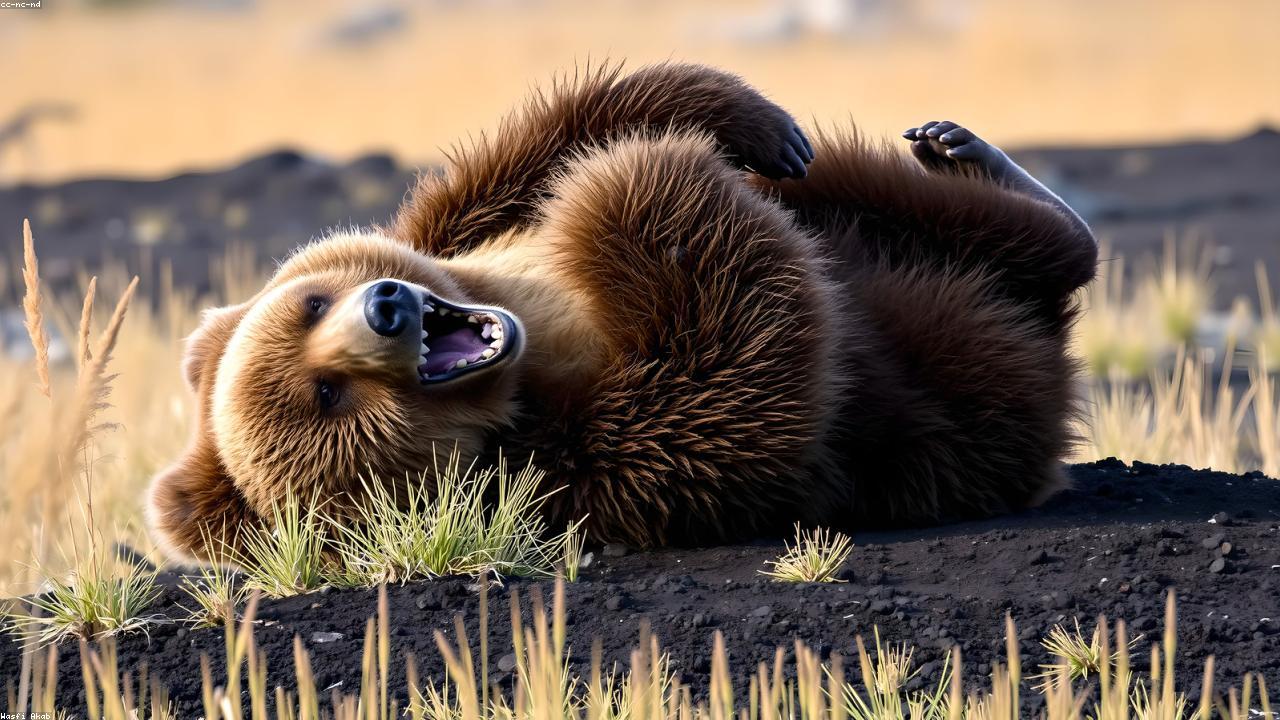
The cub was found in late August of 2024, in the smoke-choked remains of a ravine about twelve miles north of Winthrop, Washington. A hand crew from the Methow Valley fire district had been mopping up the edge of what was then a fourteen-thousand-acre burn when one of the crew, a sawyer named Renata Aguilar, heard what she initially thought was a cat.
It was a black bear cub. He weighed, when Aguilar wrapped him in her work jacket and carried him down the ridge, just under nine pounds. He had second-degree burns on three paws and singed fur across his back. His mother was not found.
The crew radioed the Washington Department of Fish and Wildlife. A biologist named Marcus Yost drove from Wenatchee that evening and took possession of the cub at the staging area.
The cub, designated B-184 in the state's database, was transferred the next day to the PAWS Wildlife Center in Lynnwood, the only facility in Washington licensed to rehabilitate black bears.
What followed was eighteen months of extremely deliberate, extremely quiet care.
The PAWS protocol for orphaned bear cubs is built around a single principle: the cub must not associate humans with food, comfort, or any positive experience. A bear that is comfortable around people, when released, is a bear that will eventually be killed.
The cub was housed in an outdoor enclosure designed to look as much like a forest as a half-acre fenced compound can. Food was delivered through a chute, by handlers wearing masks and dark coveralls. He was weighed every two weeks by being lured into a transfer cage, which he learned to enter on his own. He was not named. He was not petted. He was not, after his initial medical treatment, touched.
By the autumn of 2025, the original cub weighed one hundred and forty pounds. He went into a den constructed of straw bales and slept for four months.
By the spring of 2025, two more orphaned cubs had joined him. The three were housed together. They wrestled, climbed, and dug. They were given live trout, road-killed deer, salmonberries, ant logs, and, at one point, a beehive in a sealed plastic crate, which they opened.
By the autumn of 2025, the original cub weighed one hundred and forty pounds. He went into a den constructed of straw bales and slept for four months.
He emerged on April 8 of this year, hungry and irritable. By early May, he weighed one hundred and sixty-three pounds. He was, by every measure PAWS could apply, ready.
The release took place on May 14, in a remote drainage of North Cascades National Park, more than fifty road miles from the nearest town. The site was chosen in consultation with the National Park Service, the Forest Service, and the state. It is good black bear habitat. There is no established trail within four miles. The salmonberry crop, this year, is excellent.
Yost was present at the release, along with two PAWS staff and a park biologist. The bear was transported in a culvert trap mounted on a pickup truck. The trap was backed up to a clearing at the edge of a creek. The door was opened by remote release from forty yards away.
The bear did not come out for eleven minutes.
"That is normal," Yost said. "They are cautious. They look. They smell. They take their time."
When he did come out, he walked forward about thirty feet, stopped, lifted his nose, and turned upstream. He walked into the brush along the creek and did not look back.
He is wearing a GPS collar, which transmits a location once every four hours. The collar is designed to drop off automatically in eighteen months, which is roughly when the bear will be old enough to disperse fully into his adult range.
In the first week after release, the bear traveled approximately fourteen miles, mostly along the creek. He has fed on skunk cabbage, sedges, and at least one carcass that the GPS data suggests was a winter-killed elk. He has not approached any roads or trails.
The state will continue to monitor him through the collar. PAWS will not. Their work, the center's wildlife director said, ends at the moment the trap door opens.
"He is a bear now," she said. "He was always a bear. He just needed time to remember."
The 2024 fire, which the Forest Service later named the Cascade Fire, burned just over thirty-one thousand acres before it was contained in early October. It killed an unknown number of animals. One of them was almost the cub.
He is, instead, somewhere upstream of a creek that does not appear on the public maps, eating skunk cabbage.
Filed under
Written by
Lila Renshaw
Lila Renshaw writes for The Shoreline on stories worth sitting with.
The Reader Mail
Receive each new issue.
A weekly letter with the new pieces, an editor's note, and one quiet recommendation. No advertising. Unsubscribe at any time.
We send roughly one letter a week. We do not share the list with anyone.
More in Animals
Keep reading
Animals
A Captive Raven in Vienna Has Learned to Mimic the Sound of a Window Opening
Marcus Bell · 3 min read

Animals
A Five-Year-Old Beagle Felt Grass for the First Time on Tuesday
Priya Mehta · 3 min read
Animals
Off the Outer Banks, a Pod of Dolphins Stayed With a Foundering Fishing Boat
Owen Tate · 3 min read